Summer in Japan / Western Shikoku | Detoxifying Effect of Dogo Onsen

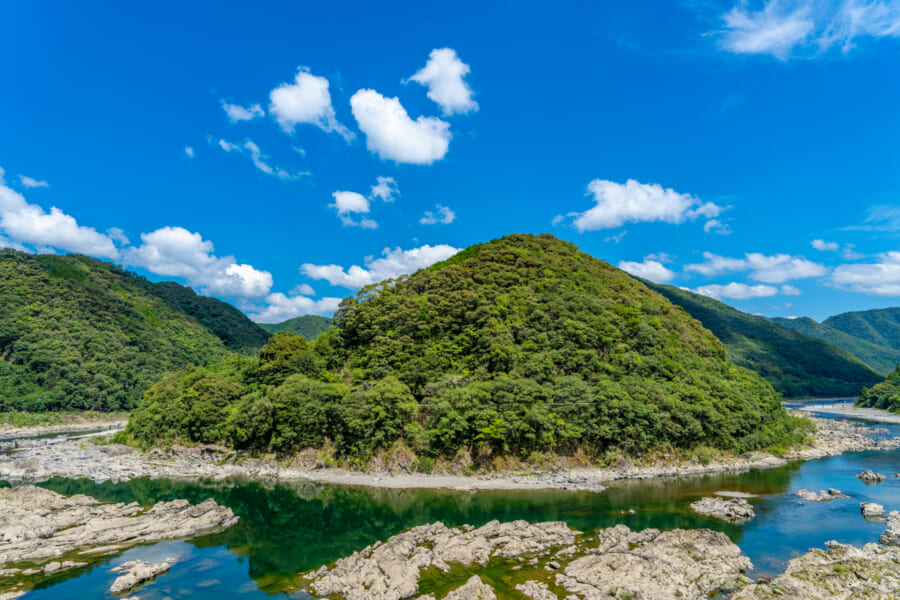
Shimanto River from JR Yodo Line
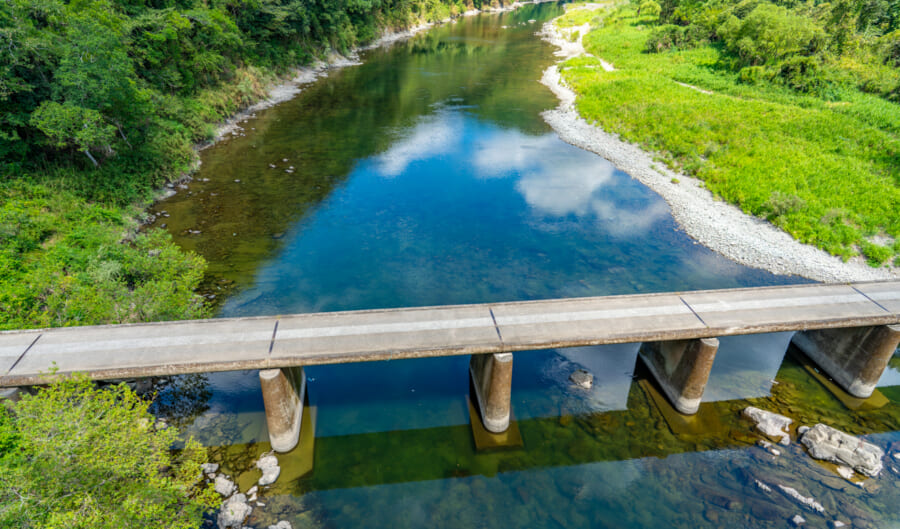
Submersible Bridge “Chinkabashi”
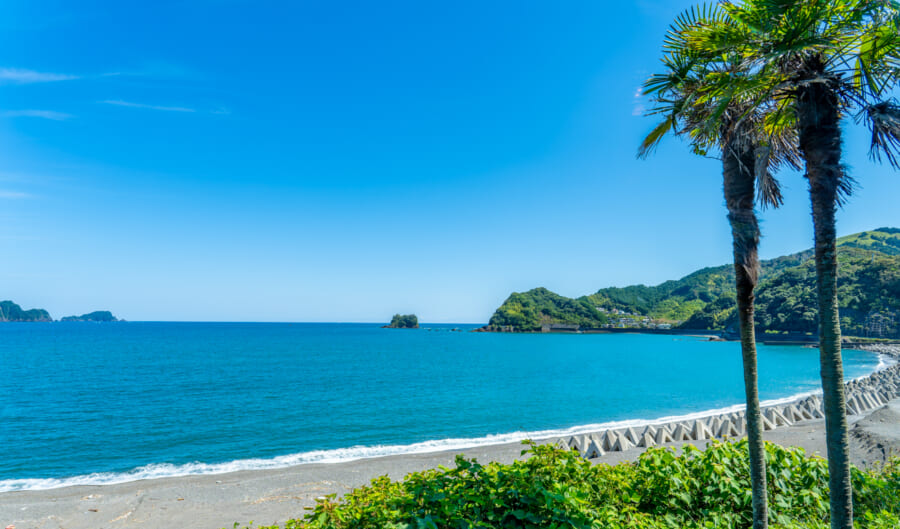
Pacific Ocean at JR Awa Station
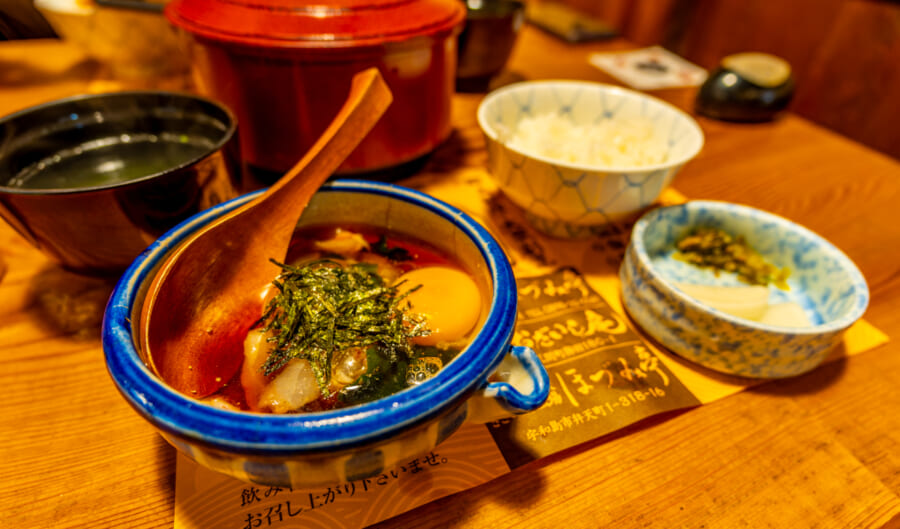
Sea Bream Rice “Tai-meshi” at Hozumitei

Summer in Japan is long and hot. When I was a child, a daily high temperature exceeding 30C (approx 85F) would make the news; nowadays, it is hardly worth reporting unless the temperature surpasses that of human body.

Despite the sweltering heat, escaping the heat is not the goal of my summer vacation. Also, I surely do not go to the beach to enjoy the summer. My priority is avoiding summer vacation crowds, which has led me to take my own summer vacation in September. So, I thought to endure the intense heat in July and August and planned a trip to Turkey in September; but by the end of July, the heat had left me feeling fed up with life.

Human psychology is such that one becomes easily swayed in moments like these. Around that time, someone happened to ask me about a good domestic travel destination and I suggested western Shikoku, a route from Matsuyama to Kochi via Uwajima. A few days later, another person checked with me to see if I could really endure the heat until September without taking a trip.

Indeed, I am a kind of middle-aged guy who lacks patience; and once I am set on something, there is nothing to stop me. Since I had just laid out a good travel plan and the idea had already taken root, why not just go for it.

I avoided absolute peak week in August, but when I looked for flight tickets for the following week, I miraculously managed to book frequent flyer award tickets with ideal schedule for a weekend getaway – the first All Nippon Airways (ANA) flight from Tokyo Haneda to Matsuyama on Saturday and the last Japan Airlines (JAL) flight from Kochi to Tokyo Haneda on Sunday. It might be a sign that gods of Shikoku telling me to come.

There is a saying that one should leave things to fate; and when it comes to the weather, this is truly the only option unless there are enough travel days. As gods of Shikoku telling me to come, the forecast called for clear, sunny skies on both Saturday and Sunday. It looked like I would be able to enjoy two full days.

I had visited Dogo Onsen in Matsuyama before, but I had always avoided the main bathhouse (Honkan). I knew it would be crowded, and waiting in a long line to get in was unappealing at all. However, it seemed the system has been changed; I can now register my phone number and receive a notification when it is my turn. While waiting, I am free to enjoy local mandarin orange juice or tarts (traditional Matsuyama pastry). That is a system even someone like me can handle.

Upon arriving at Matsuyama Airport, I hopped on a bus to Dogo. I headed straight to the Honkan, where, to my surprise, was not crowded. I decided to put off having the mandarin orange juice and the tarts for later and I went for a soak in the hot spring at first.

Perhaps because I had too much drinking the night before besides I happened to be wearing a purple shirt, when I left the Honkan, my shirt was a bad sweat-stained mess. I bought a towel on impulse, but given the high temperature, it was practically useless. With this much of sweating, I supposed Dogo Onsen had detoxifying effect.

Between Matsuyama and Uwajima, there are several towns that have preserved their old-fashioned charm, such as Uchiko, Iyo-Ozu, and Unomachi. I had visited them before, but I decided to revisit Uchiko, which had left the strongest impression. Uchiko was deserted likely due to the sweltering heat. My sweating did not let up; the detoxifying effect was still in full force.

By the evening, I arrived in Uwajima. After watching the sunset at the port, I headed to the “Hozumitei,” the highlight of this trip. It is a place known not only for famous sea bream rice (tai-meshi) but also for a variety of local traditional dishes. One thing led to another, and I ended up quite tipsy. The detoxifying effect was suspended.

On the next day, I took the sightseeing trains – a trolley (open-air carriage) and an express sightseeing train – to Kochi Station. The views of the Shimanto River and the Pacific Ocean under the clear, sunny sky were stunning. Kochi is a prefecture famous for its heavy drinking culture; being the type of person who does as the locals do, I resumed drinking as soon as onboard lunch service started on the express sightseeing train. After arriving at Kochi Station, I headed to Kochi Airport a bit too early and continued drinking at a Tosa (old name of Kochi) cuisine restaurant in the airport. The flight from Kochi to Tokyo felt like lasted only three minutes.

Whatever the detoxifying effect I had managed to achieve in Ehime Prefecture was completely undone in Kochi Prefecture on the following day. Along with beautiful towns and scenery, it seems western Shikoku truly has everything.

COLO’s Traveler Guide: Ehime & Kochi

The times listed are based on the timetable at the time of the visit.

Day 1

Tokyo Haneda 07:15 (ANA 583) > Matsuyama 08:40
Matsuyama Airport 09:00 (Bus) > Dogo Onsen 09:40

・Dogo Onsen Honkan (Main Bathhouse)

Dogo Onsen 11:44 (Tram) > JR Matsuyama Station 12:08
Matsuyama 12:30 (Uwakai 13) > Uchiko 12:57

・Uchiko

Uchiko 15:58 (Uwakai 19) > Uwajima 17:03

Accommodation: JR Hotel Clement Uwajima

Dinner: Hozumitei

Day 2

Uwajima 09:34 (JR Yodo Line / Shiman Torokko 2) > Kubokawa 12:11
Kubokawa 13:10 (Yoake Monogatari) > Kochi 16:09
Kochi Station 16:30 (Bus) > Kochi Airport 17:00
Kochi 18:55 (JAL 498) > Tokyo Haneda 20:25

Day 2 Tips
・I hoped to visit the “Habotan” near Harimaya Bridge in downtown Kochi, but with only about an hour to spare, I had to give up on that plan. There is a branch of “Tosa-cuisine Tsukasa” at the airport, their main branch is famous in the city.
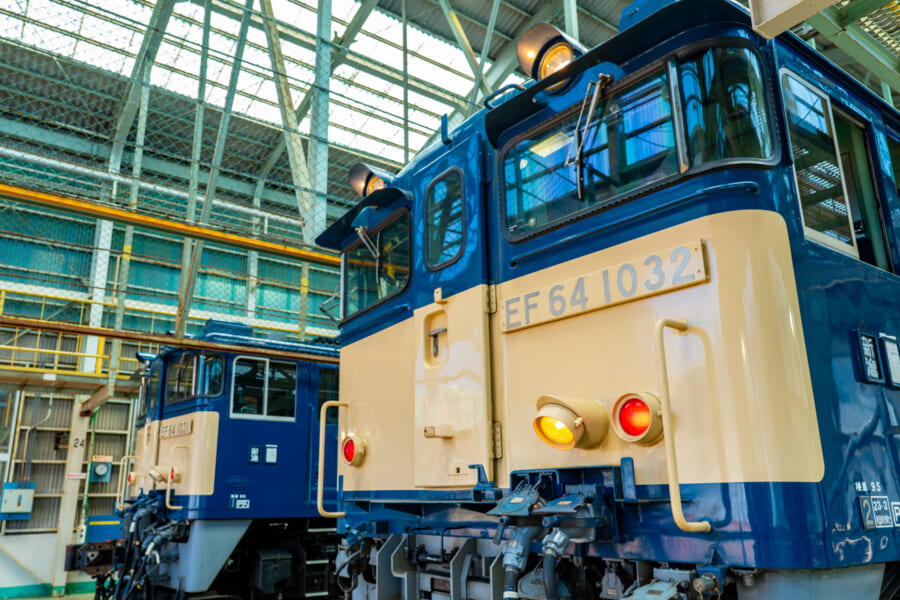
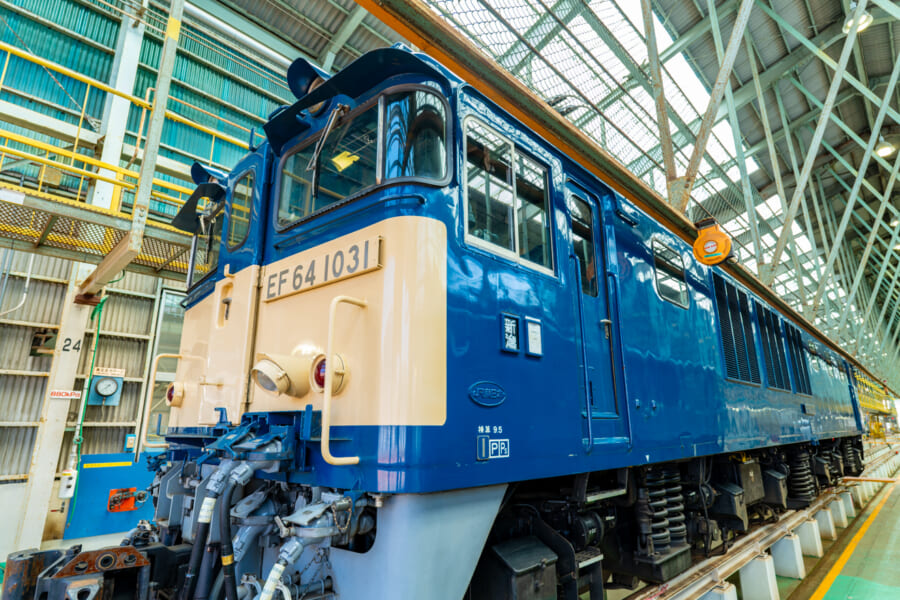
Austere Training / Akita | JNR Series EF64-1000 Electric Locomotives

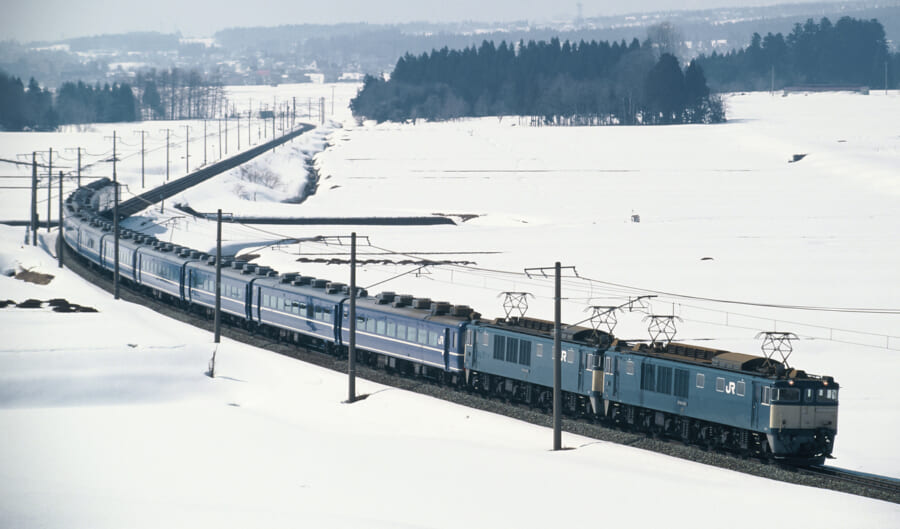
JNR Series EF64-1000

JNR Series EF64-1000

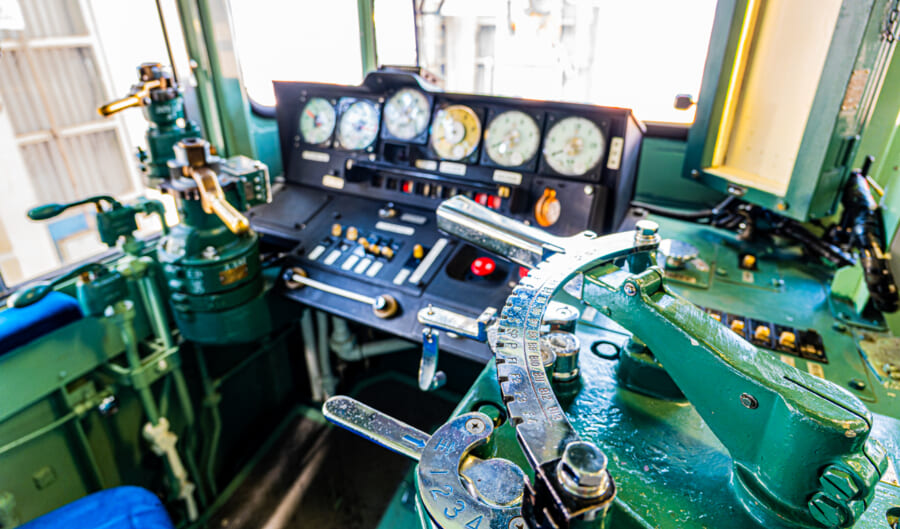
Cab of JNR Series EF64-1000

Good Olden Days

Internet advertising algorithms are remarkably accurate. After I attended a locomotive photography event at JR East Akita General Rolling Stock Center, an ad for another JR East event popped up. It said that a viewing event for Series EF64-1000, a locomotive model originally built by Japanese National Railways (JNR), would be held at the same JR facility. The event would feature two powered locomotives on display, and apparently, they would even let visitors see the driver’s cab. JR East has been scraping its JNR-era electric locomotives, so this might be the last chance to see the actual locomotives. I love JNR-era locomotives, and I also enjoy factory tours; having visited the Akita General Rolling Stock Center before, I knew the location offered a great atmosphere for photography.

After some hesitation last time, I realized that just because it was a railway event, I did not necessarily have to travel there by train. Using a frequent flyer award ticket would cut travel costs, making the decision a bit easier.

Even though such relatively easier decision was made, I still have to wonder how many times I am going to Akita Prefecture in a year. Everyone around me already knew I had different tastes, but this would be my fourth trip to Akita in first half of 2026; that was surely too much. I decided not to tell even my family about this trip at all.

By the way, I loved historical novels back in high school, particularly the works of Shotaro Ikenami and Shuhei Fujisawa. Ikenami’s stories often featured the “commoner lands” of Edo (old name of Tokyo), which was easy for me to visualize since I grew up in the old town area of eastern central Tokyo. In contrast, I found Shuhei Fujisawa, whose stories are often said to be set in Shonai region of Yamagata Prefecture, more difficult to get into at the time.

However, after recent visits to places like Sakata and Kisakata, I have started reading Fujisawa’s works again. Perhaps because I could now visualize the setting, or simply because I have gotten older, I found them incredibly interesting now. A friend who works in publishing once told me that while Ikenami’s works were mysteries, Fujisawa’s were economic novels. If that distinction holds true, then the latter is likely the real reason.

I shared these thoughts, along with stories about my visit to Mototaki, with a bartender who hailed from Kisakata. I usually have four glasses of whisky at that bar; having kept up this routine for some twenty years, I know just how to enjoy a pleasant, moderate buzz.

Normally, the presence of other customers keeps slight tension as a public space; but on this particular night, the bar had no other guests. Twenty years is a long time; long enough to let one’s guard down. I found myself while handing over photos I had taken in Kisakata, blurting out that I would be visiting Akita again.

It is human nature to become loose-lipped after a few drinks, but that can also be a weakness. Simply getting older is not enough; life requires a certain kind of austere training.

COLO’s Traveler Guide: Akita

The times listed are based on the timetable at the time of the visit.

Tokyo Haneda 07:00 (Japan Airlines JAL161) > Akita 08:05
Akita Airport (Shared Taxi) > Akita General Rolling Stock Center

・JR East Akita General Rolling Stock Center

Tsuchizaki (JR Ou Line) > Akita
Akita Station (Airport Bus) > Akita Airport
Akita 15:50 (All Nippon Airways ANA408) > Tokyo Haneda 17:05

Skip / Kisakata | Southern Akita in Fresh Greenery

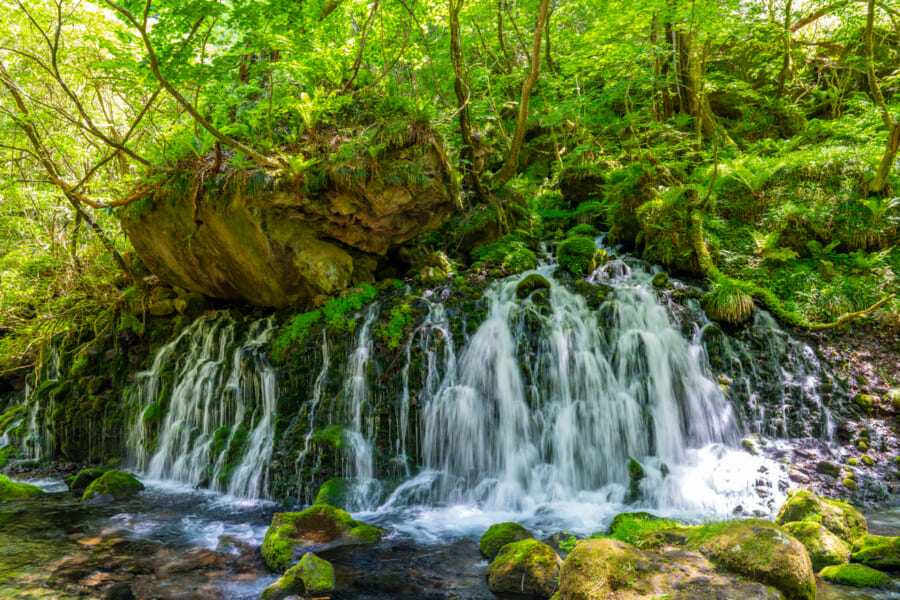
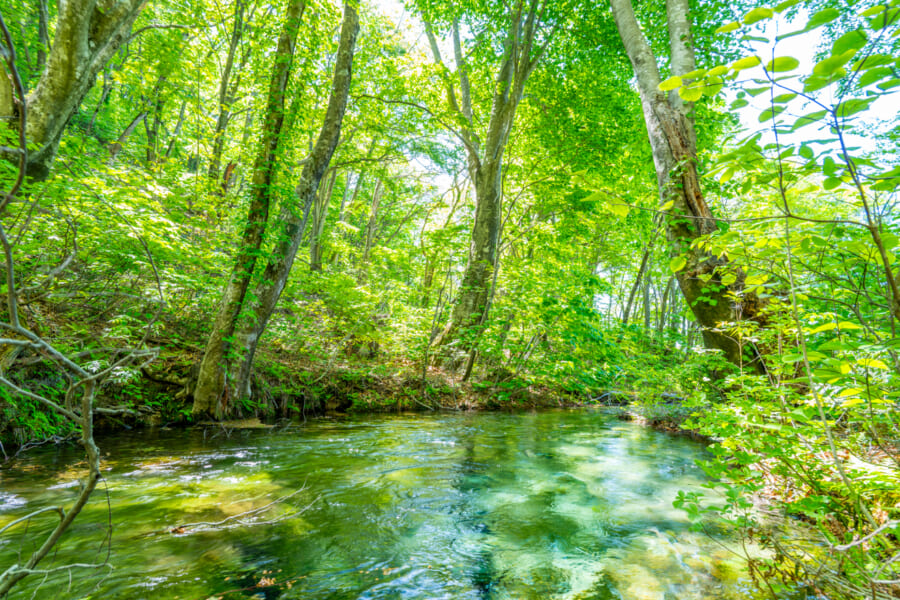
Mototaki Springs Waterfall

Mototaki Springs Waterfall

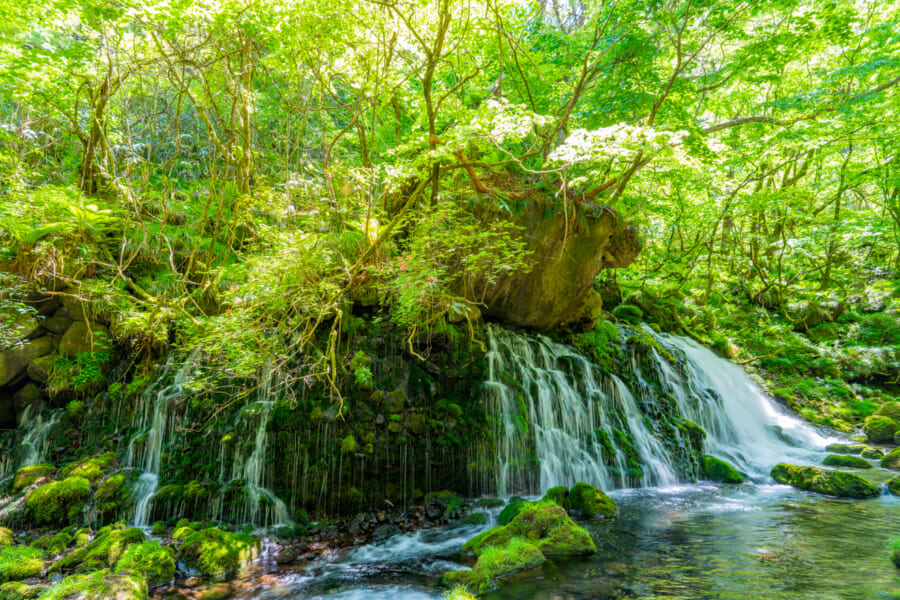
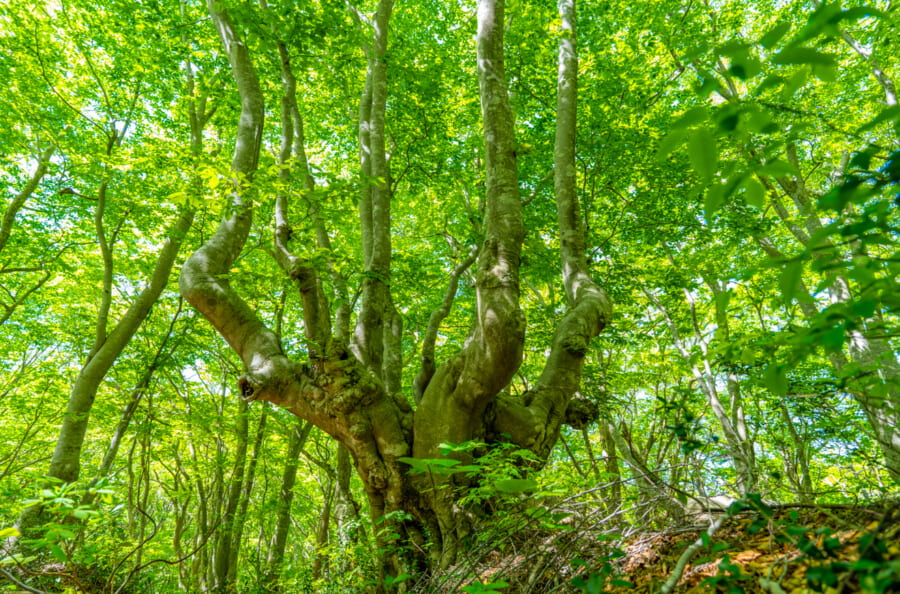
Nakajimadai Forest

Nakajimadai Forest

In high school days, I was constantly skipping classes. If asked why, the reason was that I did not want to go; furthermore, as a railway enthusiast at the time, there were photo opportunities that could only be pursued on weekdays. The root cause was simply that I was not free to take time off. It was not really my fault. Or so I told myself.

After becoming an adult, the frequency of skipping has dropped dramatically. It surely is not because I want to go to the office, but I have an obligation to work in exchange for my salary. That said, the paid leave system gives me the option to take time off; and constantly skipping work gets me fired which would completely defeat the purpose of skipping.

Last year, when visiting Sakata City in Yamagata Prefecture, a friend took me to Mototaki Springs Waterfall in Kisakata, Akita Prefecture. Like other famous spots in northern Yamagata (Shonai) to southern Akita area on the Sea of Japan, Mototaki was also magnificent.

My main goal for that trip was to photograph the sunset over the Sea of Japan from the limited express train on my way home, so I brought a compact camera that I could prop up on the train’s window frame. After adjusting the RAW files in Adobe Lightroom, I found the results were rather lacking; the compact camera was not able to fully render the rock surface in the extreme contrast at Mototaki. I needed to have a camera with large sensor to shoot Mototaki.

I was left feeling unsatisfied with the photos. Outside of work, I am the type of person who wants to resolve any unfinished issues as soon as possible. When I asked someone originally from Kisakata, he told me that during the clear, sunny days of May (called “May sunshine”) was an ideal, as it would be the fresh greenery season besides the water volume could be high.

“May sunshine” is literally in May, but for this year’s Japanese Golden Week in May, I took a nine-day break and visited Uzbekistan. Although the paid leave system exists, the reality is that as a Japanese salaryman, I cannot simply take time off whenever I want. Yet, even knowing this, I found myself checking the weather of Kisakata while I was in Uzbekistan. I suppose I am just stubborn; or maybe my behavior is simply inexplicable.

From what I learned in Uzbekistan, Okinawa’s rainy season had started early, and it looked like Honshu Island would see high temperatures starting in early May. I thought they suggested the period for fresh greenery in perfect May sunshine would be short.

I recall that I reached a similar conclusion last year, so maybe I am indeed impatient. Also, I may lack meteorological insight; I used to skip school constantly. In any case, I decided to act quickly.

For better or worse, a spell of clear weather was forecast for the week after I returned from Uzbekistan. Since I am impatient, I convinced myself that I had to seize the opportunity. By looking at the weather forecast and frequent flyer award ticket availabilities, Wednesday or Friday seemed promising.

At work, I devote all my power and wisdom as a manager to establish processes that make easier for my team to take time off. That said, taking a three-day weekend right after a full week of vacation was the toughest call. So, I decided to head to Kisakata on Wednesday.

In and of itself, it was only three days after returning from Uzbekistan. I thought I still needed to maintain some kind of reputations to uphold. So, despite being a working professional nearly fifty, I decided to skip the work at this time. Ultimately, the root cause of the skipping is inabilities to take time off freely on weekdays. It was not really my fault. Or so I told myself.

On the way back from Uzbekistan, I worked like a horse at Seoul Incheon Airport, clearing through the tasks that had piled up during my time off. I wrapped up the remaining work on Monday, acting as if nothing was amiss, and booked flights and a rental car in the evening. Then, on Tuesday afternoon, I announced that I would be taking the following day off due to a “family emergency.”

Thirty years have passed since my high school days, yet here I am doing the same thing. Still, I have matured enough to give a one-day advanced notice. Or so I told myself.

COLO’s Traveler Guide: Kisakata

The times listed are based on the timetable at the time of visit. For this trip, I made the unusual choice of using a rental car.

Tokyo Haneda 07:05 (Japan Airlines JAL161) > Akita 08:10

・Konoura Fishry Port
・Mototaki Springs Waterfall
・Naso-no-Shirataki
・Nakajimadai Recreation Forest (Shishigahana Wetland)

Akita 16:55 (Japan Airlines JAL166) > Tokyo Haneda 18:10