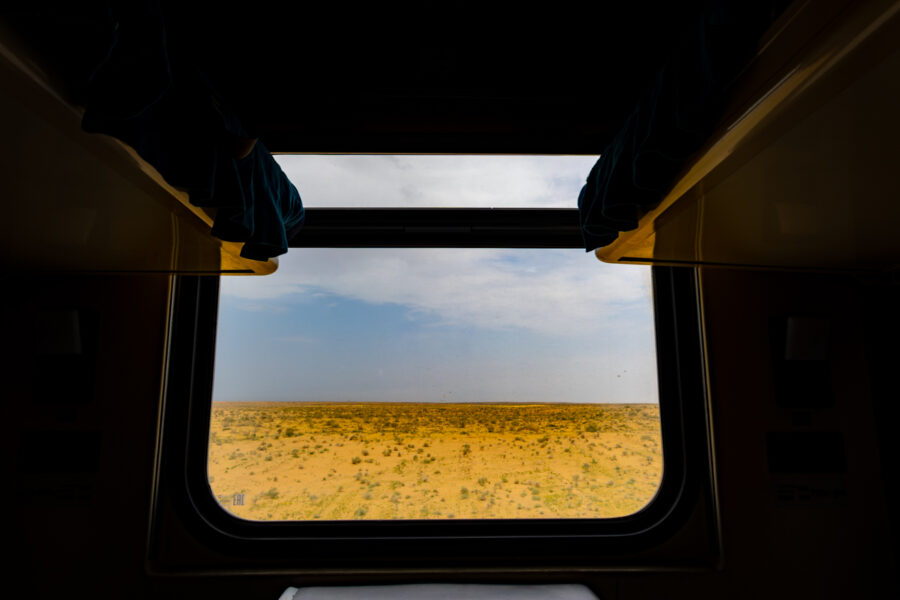
Silk Road from Uzbekistan Railways
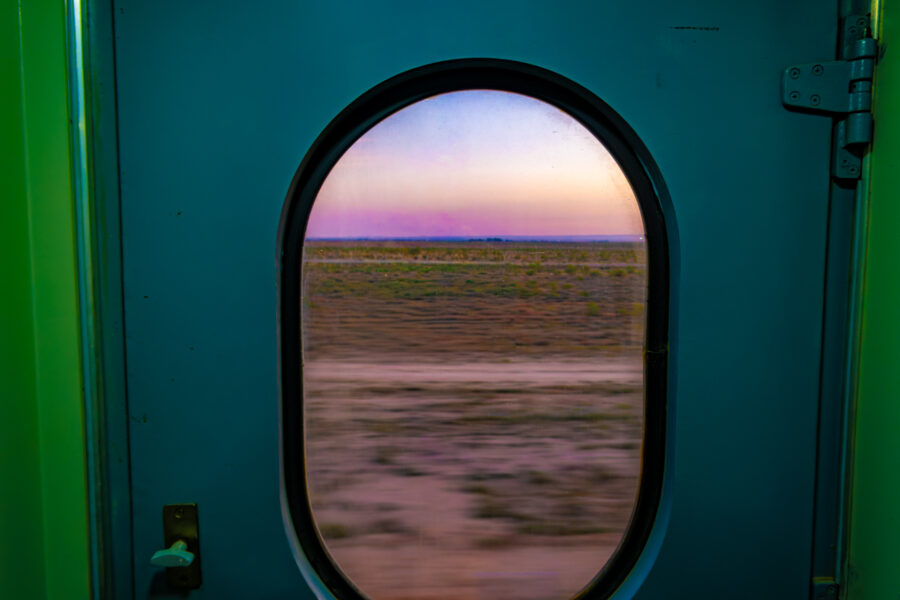
Dawn on Silk Road
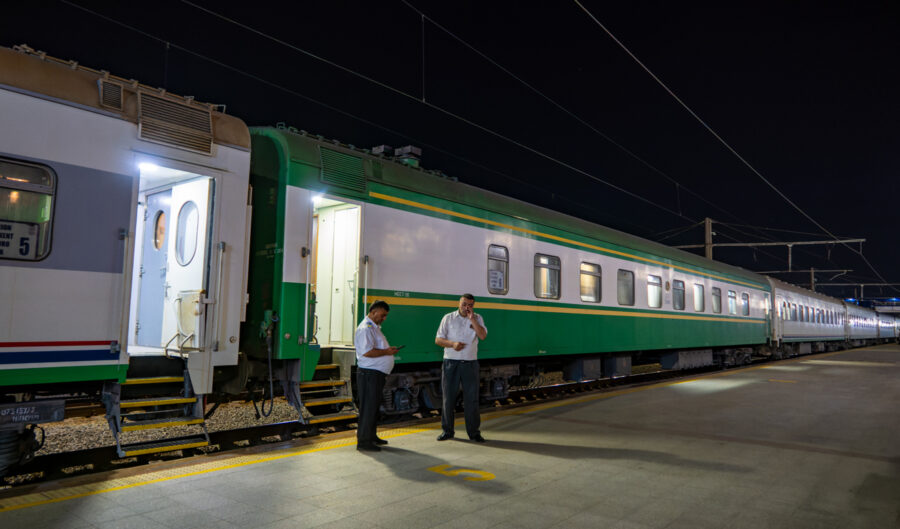
Midnight Express at Samarqand Station
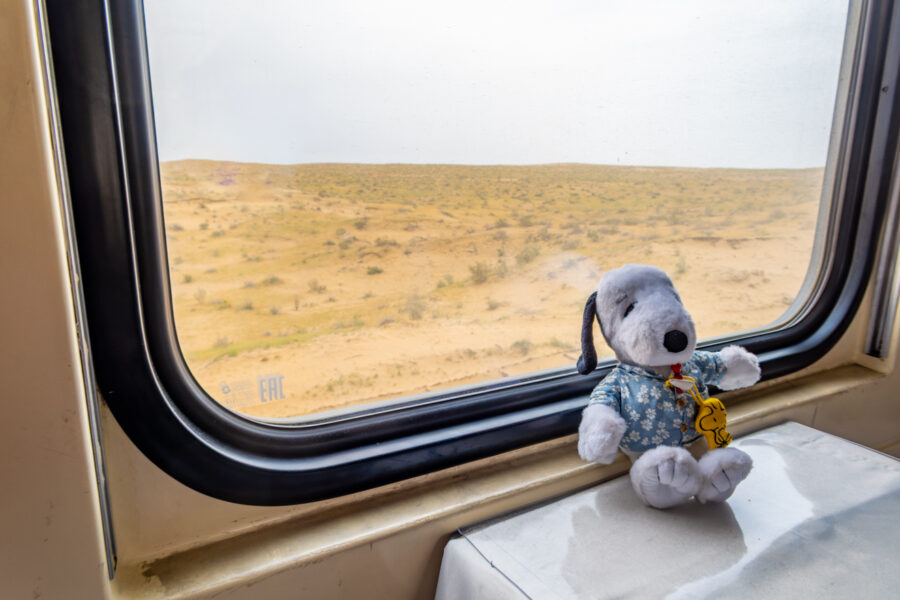
Enjoy the Ride
I have my air as a seasoned traveler; nonetheless I am not fond of sleeper trains.
After taking a Japan National Railway (JNR)’s Blue Train (regular sleeper train JNR/JR used to operate) from Hiroshima to Tokyo back in elementary school days, I had not taken a sleeper train until I boarded Amtrak as an adult. Even though I booked a private cabin for the journey from Seattle to San Francisco, I did not enjoy being stuck in a small cabin for so long time besides the bathroom facilities were shared. For subsequent long-distance trips, unless day-time train was an option, I would do everything to find flights instead. As for the sleeper trains, Orient Express was the only exception I took, but it should be considered as a historic experience rather than a mere mode of transport.
I have suffered from insomnia with a bit of claustrophobia. On top, I snore loudly and toss around in bed. Given all this, not just a small private cabin, but also a four-person compartment with bunk beds common in many countries also appears to be a difficult place for me. Needless to say, a six-person compartment with three-tier bunks is completely out of the question.
However, the inevitable moment had finally come. To get from Samarkand to Khiva, another World Heritage Site in Uzbekistan, the best option is to take a train. There were a few trains per day running from Tashkent to Khiva via Samarkand and Bukhara, but they were all overnight services. It may be romantic to say taking a train along the Silk Road, but the reality is that there was no other efficient choice. Since I have such a strong aversion to sleeper trains, I wanted to be thoroughly prepared before boarding.
Reading through various websites, I found many mentions the difficulties involved in using Uzbekistan Railways. Such issues include a lack of platform information even at major stations, and station announcements made only in Uzbek. Delays are highly likely; if boarding a train at an intermediate station, the exact departure time is often unknown. Yet, I managed to make it work during the trip to Uzbekistan last year. As long as I secure my tickets properly, I should be able to manage this year too.
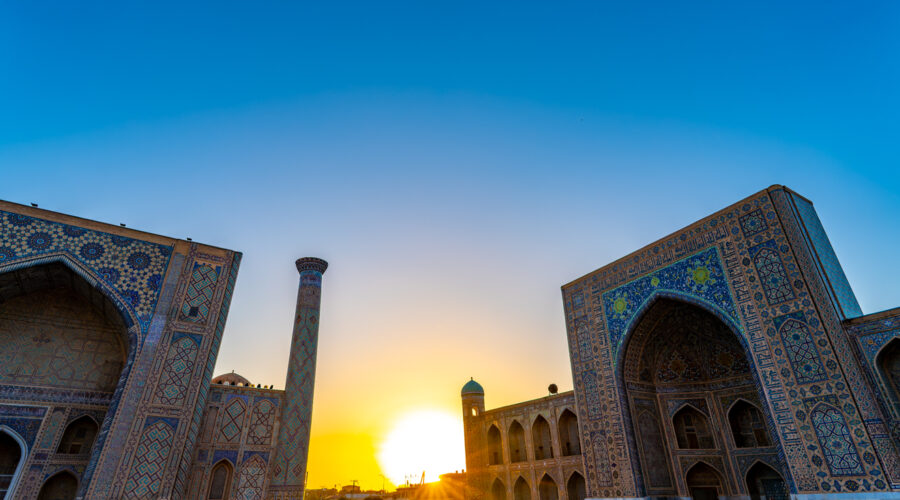
On my final day in Samarkand, I headed to Shahrisabz first thing in the morning. Afterward, I spent a packed day seeing the sunset at Registan Square, night view of Shah-i-Zinda, and then returning to Registan Square for the light show and night scenery. I checked out the hotel before 1:00 a.m. and headed to the station.
When I arrived at Samarkand Station, a train had already stopped at the platform. I checked with the ticket gate staff and learned it was the earlier train bound for Khiva. I spent the time taking photos of the late-night station.
Despite the late hour, the waiting room at Samarkand Station was crowded, due to many overnight trains in and out of the station. I figured I could just follow the crowd when the time came to move. I bought a coffee and a hot dog to kill time till my train would arrive.
After passengers for a Tashkent train had moved, a quiet spell settled in. Despite the coffee I just had, I was sleepy that drifting off. It was a long day after all.
With time to spare, I went out to the platform around 2:00 a.m. to shake off the drowsiness, and saw a train was stopped there. I felt foggy and watched the train leaving, only realizing afterward that it was the train heading toward Khiva.
I rushed back to the gate staff, who told me that my train just had departed right on time. I was overcome with despair. I tried to think of alternatives, but the Uzbekistan Railways website was down for maintenance. In any case, waiting until the following night’s train seemed a waste of time; perhaps I should go to Tashkent and catch a domestic flight instead.
Just as I was literally tearing my hair out, the station staff whom I had spoken to waved at me. We communicated via an app, and it turned out there was another train to Khiva at 3:00 a.m.
I was taken to the ticket counter; the first step was getting a refund for the tickets for the train I had missed. What I really wanted, however, was tickets for the next train. After refund process was completed, the ticketing agent informed me that there was only one ticket available to Khiva on the 3 a.m. train.
I was literally tearing my hair out again. There seemed to be two choices. I would take the train to Khiva alone and remotely arrange my wife’s transfer and domestic flight to Khiva via Tashkent. Alternatively, we might be better to stick together, and both would go to Khiva via Tashkent. Either way, I needed to check schedule and seat availability on the flights from Tashkent to Khiva which I believed to be operated only 2-3 flights per day by narrow-boy Boeing 737s.
Just then, unexpected third choice came in. The station staff said he would negotiate with the train conductor. At this point, I would not have complained even if we were in a luggage car; if they would let us ride on the locomotive, I would pay whatever price they named. After waiting on the platform until just before departure, they found spots in a first-class sleeper car though my wife was in a separate compartment.
Since we had not bought official tickets, I was told the fare would be settled on board. After we were taken to our compartments, I was summoned to the end of the car. Using universal hand gestures, the conductor asked for cash, and I handed over the amount the station staff had told me. It was a reasonable price, essentially the standard fare rounded up, though an under-the-table deal.
We had finally secured transport and places to sleep, but I was in an upper berth and terrified of falling. I recalled the JNR sleeper train had safety ropes to prevent falls, whereas the Uzbekistan Railways sleeper car only had a low guardrail. To make matters worse, while my wife ended up sharing her compartment with three young female travelers, mine was packed with middle-aged Uzbek men. Looking back, perhaps I should have insisted on changing rooms at the expense of my wife, but I simply did not have the presence of mind for that at the time.
Middle-aged men are the middle-aged men all over the world. The compartment, already stiflingly crowded with three of them, the heat trapped in the upper berths, making it impossible to fall asleep. Besides, the drowsiness that had been stronger than coffee vanished had gone and I had exhausted myself mentally just getting on the train; sleep became the last thing on my mind.
With nothing else to do, I booted up MacBook Air in the dim light and spent the time editing photos using Adobe Lightroom. It kind of reminded me of developing films and making prints in a darkroom. It was a sign, perhaps, that I was finally settling down mentally. I have come to hope to catch a glimpse of the sunrise from the night train if possible.
The train arrived in Bukhara at daybreak. A different conductor from the one I had seen earlier came to me, apparently telling me to bring my luggage along. He led me to my wife’s compartment and, using gestures, explained that since the cabin would be empty from Bukhara onwards, we were free to use it. Everyone was just so kind.
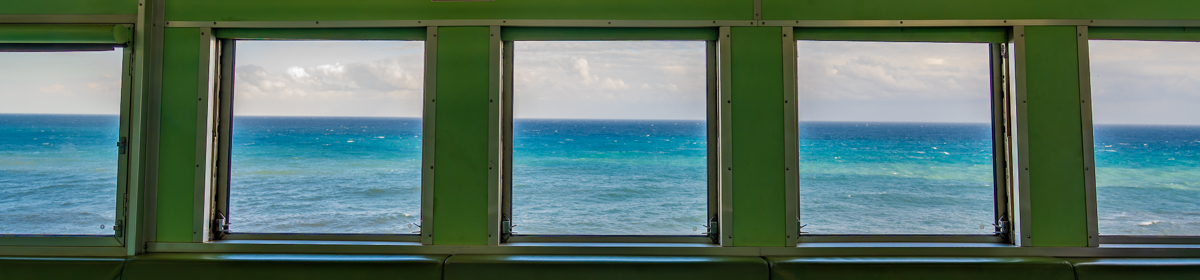
The journey from Bukhara to Khiva took another five hours or so. Since I had a lower berth on this leg, I was able to sleep. As I drifted in and out of sleep, the train pressed on along the Silk Road. The scenery outside was so unfamiliar that it felt like a waste to sleep through it; I spent the time photographing the landscape passing by the window.
It turned out my air as a seasoned traveler was just a facade.