
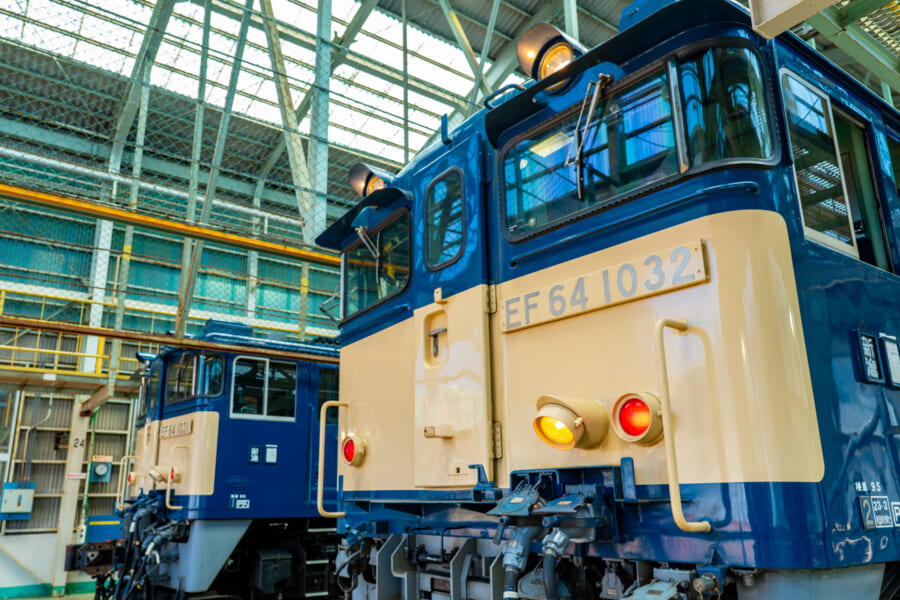
JNR Series EF64-1000
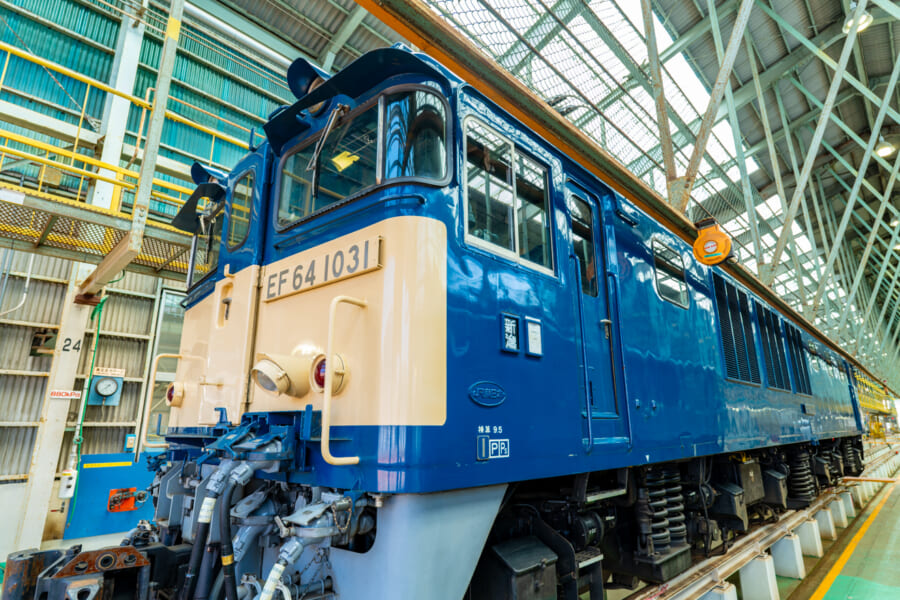
JNR Series EF64-1000
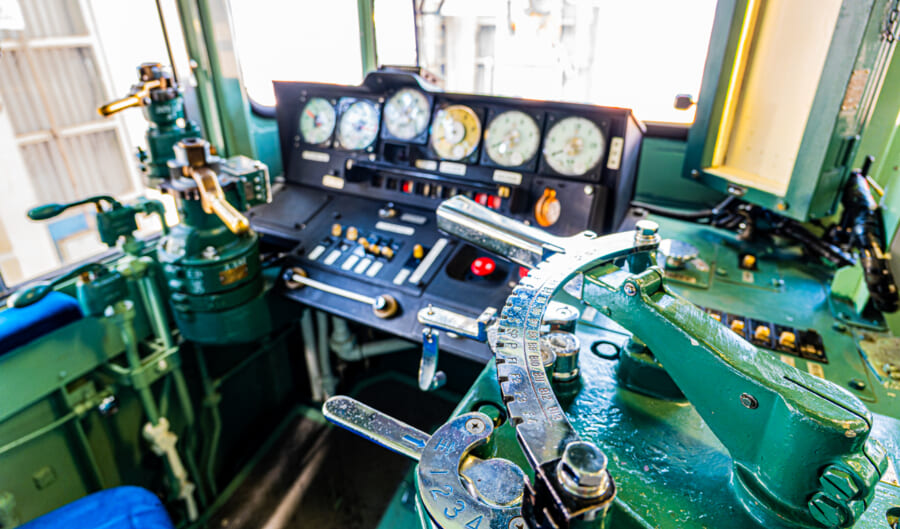
Cab of JNR Series EF64-1000
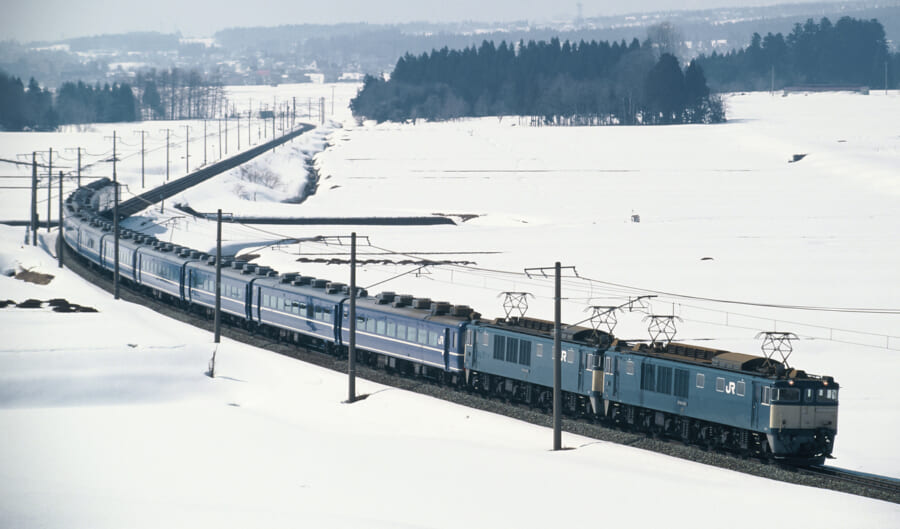
Good Olden Days
Internet advertising algorithms are remarkably accurate. After I attended a locomotive photography event at JR East Akita General Rolling Stock Center, an ad for another JR East event popped up. It said that a viewing event for Series EF64-1000, a locomotive model originally built by Japanese National Railways (JNR), would be held at the same JR facility. The event would feature two powered locomotives on display, and apparently, they would even let visitors see the driver’s cab. JR East has been scraping its JNR-era electric locomotives, so this might be the last chance to see the actual locomotives. I love JNR-era locomotives, and I also enjoy factory tours; having visited the Akita General Rolling Stock Center before, I knew the location offered a great atmosphere for photography.
After some hesitation last time, I realized that just because it was a railway event, I did not necessarily have to travel there by train. Using a frequent flyer award ticket would cut travel costs, making the decision a bit easier.
Even though such relatively easier decision was made, I still have to wonder how many times I am going to Akita Prefecture in a year. Everyone around me already knew I had different tastes, but this would be my fourth trip to Akita in first half of 2026; that was surely too much. I decided not to tell even my family about this trip at all.
By the way, I loved historical novels back in high school, particularly the works of Shotaro Ikenami and Shuhei Fujisawa. Ikenami’s stories often featured the “commoner lands” of Edo (old name of Tokyo), which was easy for me to visualize since I grew up in the old town area of eastern central Tokyo. In contrast, I found Shuhei Fujisawa, whose stories are often said to be set in Shonai region of Yamagata Prefecture, more difficult to get into at the time.
However, after recent visits to places like Sakata and Kisakata, I have started reading Fujisawa’s works again. Perhaps because I could now visualize the setting, or simply because I have gotten older, I found them incredibly interesting now. A friend who works in publishing once told me that while Ikenami’s works were mysteries, Fujisawa’s were economic novels. If that distinction holds true, then the latter is likely the real reason.
I shared these thoughts, along with stories about my visit to Mototaki, with a bartender who hailed from Kisakata. I usually have four glasses of whisky at that bar; having kept up this routine for some twenty years, I know just how to enjoy a pleasant, moderate buzz.
Normally, the presence of other customers keeps slight tension as a public space; but on this particular night, the bar had no other guests. Twenty years is a long time; long enough to let one’s guard down. I found myself while handing over photos I had taken in Kisakata, blurting out that I would be visiting Akita again.
It is human nature to become loose-lipped after a few drinks, but that can also be a weakness. Simply getting older is not enough; life requires a certain kind of austere training.
COLO’s Traveler Guide: Akita
The times listed are based on the timetable at the time of the visit.
Tokyo Haneda 07:00 (Japan Airlines JAL161) > Akita 08:05
Akita Airport (Shared Taxi) > Akita General Rolling Stock Center
・JR East Akita General Rolling Stock Center
Tsuchizaki (JR Ou Line) > Akita
Akita Station (Airport Bus) > Akita Airport
Akita 15:50 (All Nippon Airways ANA408) > Tokyo Haneda 17:05