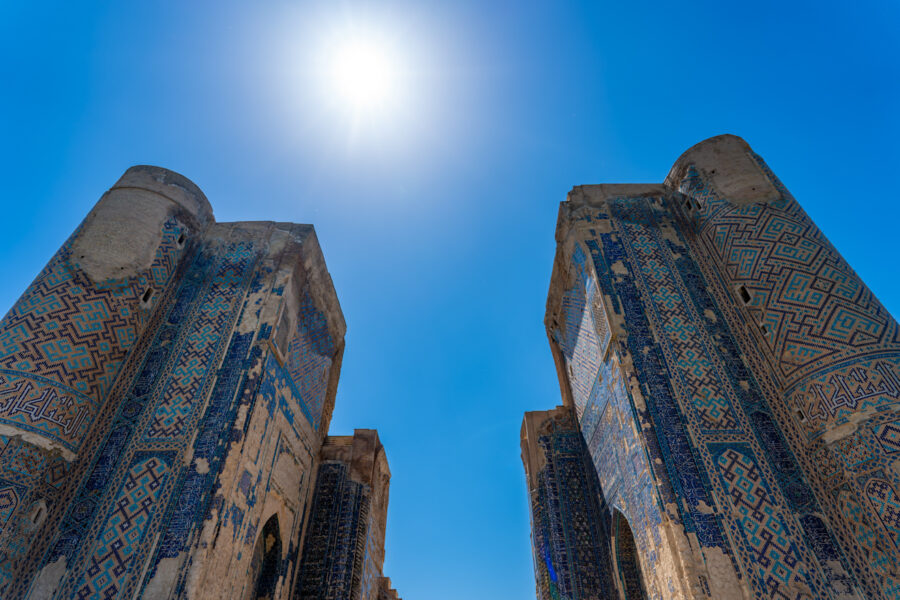
Ak-Saray Palace
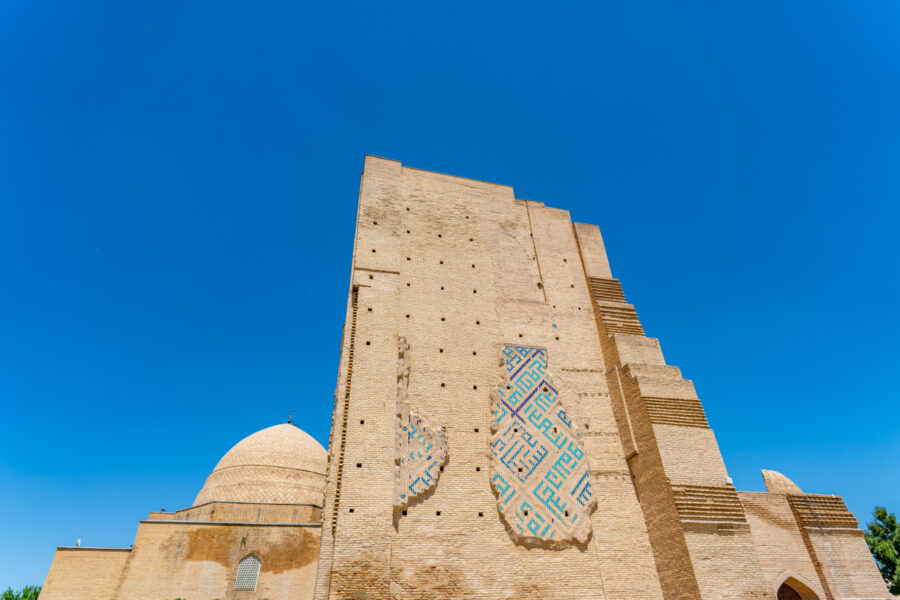
Dor-us Siyodat
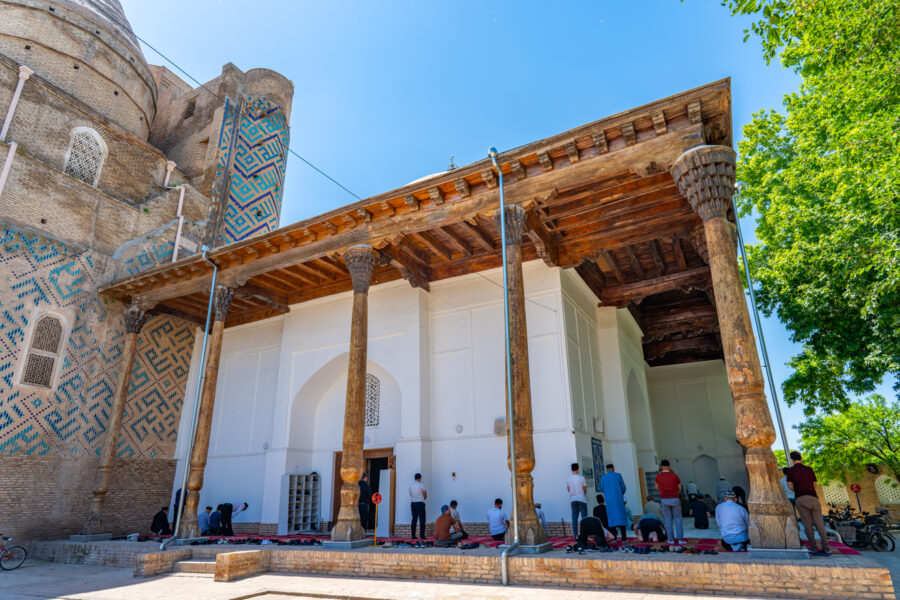
Dor-us Siyodat
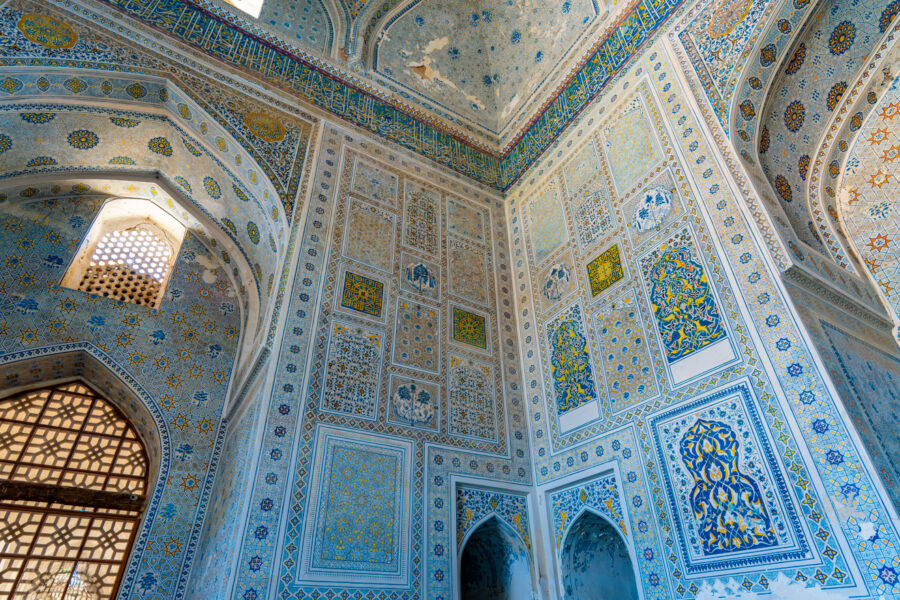
Dor-ut Tilovat Ensemble
Last September, I finally went to Samarkand in Uzbekistan. At that time, I was interested in Shahrisabz, a historic town near Samarkand. However, even though it was a solo independent trip, I had time constraints.
Since I was not sure if I would have another opportunity to visit Uzbekistan, I was torn between enjoying Samarkand to the fullest or packing my schedule to go to Shahrisabz. There is a Confucianism text regarding the proper order of things, “To climb to the high, one must start from the lowest.” I was not fully sure whether I should climb it or not.
Even at the time I was in Samarkand, I still considered whether I should climb it or not. In the end, since my trip was mainly for photography, I prioritized taking my time to explore Samarkand. I only had limited information about Shahrisabz; I thought it would be better to get a grasp on the lower ground before attempting to climb to the high where I did not know what awaited me.
Unexpectedly, I ended up visiting to Uzbekistan for the second year in a row. Since it was my wife’s first trip to Uzbekistan, we could not miss Samarkand, the country’s top tourist destination. Since I already knew the must-see spots in Samarkand, there was no need to take a leisurely itinerary like last year. It was about time to climb to the high. I decided to go to Shahrisabz this year.
I searched again, but there was not much information on how to get to Shahrisabz. Finding a group tour would probably be the easiest option. However, since my focus was photography, I wished to have freedom to move around as I wish. Apparently, there was another option of taking a local shared van to Shahrisabz, but it could be very crowded and getting to pick-up points would be a hassle and waste of time.
I wondered if there would be an easy way to climb to the high.
Uzbekistan is a natural gas producing country, and its cars run on inexpensive methane gas. Taxis are inexpensive unless getting ripped off. However, I can effectively negotiate prices at work only, negotiating fares on the street would be a waste of time. I decided to ask the hotel to arrange a taxi. In any case, traveling with my wife should reduce the cost impact compared with the last year when I traveled solo.
Since cost management at work uses unit cost as a benchmark, I felt the cost would be halved by two people. However, from a household budget perspective, the cost of taxi fares is ultimately the same. Without realizing this, I received a quote from the hotel.
Maybe due to the lingering influence of former Soviet culture, unlicensed taxis are common in Uzbekistan. I have seen men attaching taxi signs to their private cars multiple times, so it is possible there is not a licensing system in place. In any case, aside from ride-hailing apps, fares are negotiable and while there may be a going rate, there is no fixed one. It was only at this point that I finally realized the magic of two-people taxi cost, but considering the round-trip fare plus waiting fees, I decided to believe that the amount seemed reasonable. By the time I requested a quotation, I was eager to climb to the high, already made a first step. This is why I do not have negotiation skills on street.
The driver who showed up was, as expected, an older man who seemed to be an acquaintance of someone at the hotel. I handed the cash to a hotel clerk, and the staff passed it to him. I was sure a few bills were taken in between, which must be the difference between the foreigner rate and the local rate. I just considered it as a handling fee.
Between Samarkand and Shahrisabz lies the Takhtakaracha Pass. I chose a clear day because I heard that I could see the Zarafshan Mountains, the border with Tajikistan, along the way. When we stopped at the viewpoint, I could see snow on the distant mountains. I had also seen the magnificent snow-covered landscape of the Tian Shan Mountains from the plane to Tashkent, which I supposed they were two advantages of coming to Uzbekistan in May.
However, upon arriving in Shahrisabz, the heat and sunshine were so intense that I forgot all of those advantages. The Historic Centre of Shahrisabz has been overdeveloped and designated a World Heritage Site in Danger. As a result, it is artificially isolated from the surrounding city area, and there are only a few places to eat and drink within the Historic Centre. It reminded me when I succumbed to the intense heat at the Hue Imperial Palace in Vietnam.
Although it is a World Heritage Site in Danger, overdevelopment is mainly the infrastructure of the Historic Centre. Restorations of the ruins and building are moderate and charming. Shahrisabz had significantly fewer tourists than Samarkand, making it easier to take photos.
However, the lack of tourists also meant there were fewer sights to see, combining with the Historic Centre where almost became a park, I might have felt that I had wasted half a day if I came to Shahrisabz last year. Nevertheless, together with the snowy scenery of the Zarafshan Mountains, it was a satisfying little trip for me as a second-time visitor.
Getting a grasp on the lower ground before climbing to the high was well worth it.